By Kristine Smith
Can you eat the fish you catch in Idaho? Often, yes—if you can identify it, current rules allow you to keep it, and you follow any consumption advisory for that species and water. This family guide will help you make those checks and get a legal catch safely from the water to the dinner table.
Do you remember your first fishing trip?
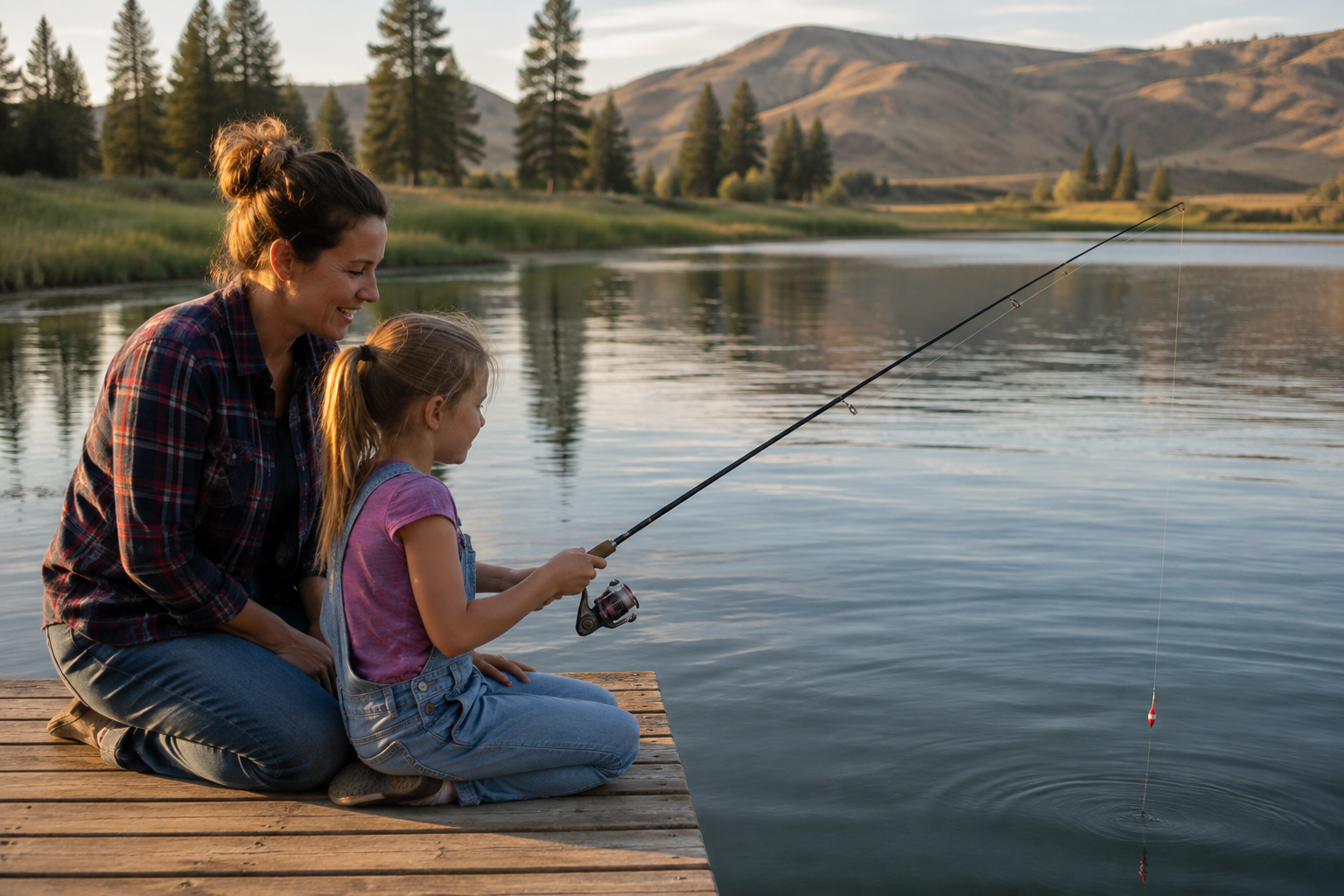
There was all the excitement and anticipation of going somewhere with family or friends. The pole had to be set up just right, complete with a hook and bobber.
Then came the bait.
Were you brave enough to touch it, or were you hoping someone else would volunteer?
Finally, it was time for that first cast. The line sailed through the air, and the bobber landed with a slight splash.
Then you waited for the smallest movement.
Did it move?
Was that a fish, or just the water?
Suddenly, the bobber disappeared, and you felt a tug on the line.
Oh, the thrill of reeling in that very first fish.
It may have been a tiny bluegill, a slippery trout, or something nobody could identify while everyone offered a different opinion. It did not matter. For that moment, it was the most exciting fish ever caught.
Then someone asked the next question:
Can we eat it?
In Idaho, the answer is often yes, but not always.
Some fish make wonderful meals. Others must be released. A fish may be legal to keep in one lake but protected in another, and certain species come with recommendations about how frequently they should be eaten.
Idaho has more than 40 game fish species, so we cannot cover every possible catch in one article. We can, however, look at the fish Idaho anglers commonly consider taking home for dinner and what families should know before putting one in the cooler.
Before the Fish Goes in the Cooler
You do not need to memorize the entire Idaho fishing rule book, but you do need to answer four questions:
- What kind of fish did we catch?
- Can we legally keep it from this water today?
- Does it meet the current size, number, and permit requirements?
- Is there a consumption advisory for this fish or water?
If nobody can confidently identify the fish, let it go.
Fishing rules can vary by region and individual body of water. The Idaho Fishing Planner lets you search for a lake, river, reservoir, or pond and see its species, limits, access information, and special rules.
The Idaho Fish Consumption Advisory Map answers a different question. It tells you whether health officials recommend limiting or avoiding fish from certain waters.
A fish can be edible but illegal to keep. It can also be legal to harvest but covered by a consumption advisory. That is why both checks matter.
In Idaho, people age 14 and older generally need a fishing license. Idaho resident children under 14 do not need one. Nonresident children under 14 must fish with someone who holds a valid Idaho fishing license, and their catch counts toward that person’s limit unless they purchase their own license. Salmon and steelhead have additional permit requirements and youth exceptions, so check the current license and permit requirements before heading out.
Which Idaho Fish Might Become Dinner?
Trout
For many Idaho anglers, trout is where the story begins.
Idaho Fish and Game stocks rainbow trout in waters around the state, including ponds where children and beginning anglers can fish from the bank. Rainbow trout has tender, mild meat that can be baked, grilled, or fried.
Cutthroat, brook, brown, and lake trout may also be eaten where harvest is allowed. Correct identification matters because trout rules are not the same in every water, and cutthroat receive additional protection in some places.
Growing up, we never skinned or descaled our trout. We cleaned them, removed the internal organs, and cooked them with the delicate skin and tiny scales still in place. The skin could be eaten or simply left behind on the plate.
Kokanee
Kokanee offers something a little richer. Kokanee are the freshwater form of sockeye salmon, remaining in lakes and reservoirs rather than traveling to the ocean. Their meat has a deeper, more salmon-like flavor than trout and can be grilled, baked, smoked, or preserved.
Catching kokanee may require a boat and different equipment than an afternoon beside a stocked pond. It can take more planning, but the reward is both an exciting catch and an excellent meal.
Panfish: Yellow Perch, Crappie, and Bluegill
Then there are yellow perch, crappie, and bluegill, often grouped under the practical name of panfish.
These smaller fish may not create the dramatic photographs of a large trout or salmon, but they can keep a fishing trip busy. Their meat is mild and flaky, although their size means more cleaning before there is enough for dinner.
They are also likely to start a cheerful disagreement about whose fish was actually the biggest.
Channel Catfish
Channel catfish brings a different flavor and texture to the table. Its meat is firmer and richer than trout or panfish. Catfish can be baked or grilled, but many people prefer it coated in seasoned breading and fried until crisp.
Catfish do not have scales. Their thick skin is normally removed before cooking. A larger catfish may also test the fishing line and the determination of the person holding the pole.
Mountain Whitefish
Mountain whitefish does not always receive the same attention as trout, but it deserves more credit.
The meat is mild and delicious when prepared well. One of our favorite ways to eat whitefish is battered and deep fried until the outside is crisp and golden. There may be a few more bones to work around, but the flavor makes the extra effort worthwhile.
Whitefish may not be the fish everyone brags about catching, but it can become one of the best meals of the trip.
Fish With Extra Considerations
Walleye
Walleye is highly regarded as a table fish because of its mild, flaky meat. Its place in Idaho is complicated, however.
Walleye are not native to the state, and Idaho Fish and Game manages them differently depending on the water. Anglers are encouraged to harvest them in some locations because of concerns about their effect on trout, salmon, steelhead, and other fisheries.
If you catch a walleye, check the current rule for that exact location before deciding what happens next.
Bass
Bass is another fish surrounded by strong opinions. Some anglers enjoy its firm, mild meat. Others would rather release every bass they catch.
The important consideration is that Idaho has a statewide bass consumption advisory. Largemouth and smallmouth bass caught in Idaho may contain elevated mercury levels.
The advisory does not mean nobody can eat bass. It provides limits on how frequently bass should be eaten, particularly by children under 15 and people who are pregnant, nursing, or planning a pregnancy. Check the current Idaho bass advisory before serving it.
Salmon and Steelhead
Salmon and steelhead can provide rich, flavorful meat and a fishing story people tell for years. They also require more preparation before the trip.
Their seasons may open or close separately, the regulations can change during the season, and anglers need the correct permits. Always check Idaho Fish and Game’s current salmon or steelhead information immediately before fishing.
Some Fish Must Go Back
Bull trout cannot be harvested in Idaho. If you catch one, release it carefully.
White sturgeon are also protected from harvest. They must remain in the water while being handled and photographed.
Certain nongame fish are protected as well. Idaho Fish and Game’s resident fish identification guide can help you learn what to look for before your trip.
Knowing what you caught is more than an interesting nature lesson. It is part of being a responsible angler.
From the Water to the Dinner Table
Not every fish needs to be skinned or descaled.
Trout, kokanee, salmon, and steelhead can be cooked with the skin on. Perch, crappie, bluegill, bass, walleye, and whitefish are often prepared as skinless fillets. Catfish is normally skinned because of its thick, scaleless skin.
If a consumption advisory recommends removing the skin and fatty tissue, follow that guidance. This may reduce certain contaminants stored in fat, but it does not remove mercury from the meat or replace the official meal limits.
Once you decide to keep a legal catch, cool it promptly. Keep it on ice in a cooler or refrigerate it at 40°F or below. Use clean equipment and keep raw fish separate from food that will not be cooked.
Fish should reach an internal temperature of 145°F, measured in the thickest portion with a food thermometer. Check carefully for bones before serving fish to children.
Fish is also one of the major food allergens recognized by the U.S. Food and Drug Administration. Anyone with a known or suspected fish allergy should avoid eating the catch and prevent contact with utensils and surfaces used to prepare it. Families with questions about introducing fish to a child should follow guidance from their healthcare provider.
Where Will Your Next Fishing Story Begin?
Browse Fishing and Boating in Idaho to find ponds, lakes, reservoirs, rivers, docks, and shoreline access around the state.
For more ideas, explore our guides to seven popular Idaho lakes and seven Idaho lakes worth discovering.
Of course, fish do not read family itineraries.
A fishing trip does not need to end with a full cooler to be successful. Maybe a child casts independently for the first time. Perhaps everyone spends more time untangling lines than catching fish and laughs about it all the way home.
Sometimes the fish steals the bait and disappears.
Sometimes the catch must be released.
And sometimes you really did catch dinner.
Official Resources
Last reviewed: September 8, 2026.
Fishing regulations and consumption advisories can change. Always confirm current information for the species and water before keeping or eating a fish. This article provides general information and is not a substitute for current fishing regulations or personal medical advice.